The MetEd online training service covers topics in meteorology, weather forecasting, and related geosciences. Users can delve into everything from satellite meteorology to tsunami preparedness and forecasting dust storms.
A small but active group of discipline-crossing specialists are analyzing the response of disease transmission to temperature, moisture, and other atmospheric variables.
Reporters from Wyoming and northern Colorado got their first look inside the nearly completed building that will house the NCAR-Wyoming Supercomputing Center.
The air in the vicinity of Earth’s biggest urban areas includes a wild variety of constituents emitted by cars, factories, trees, and much more. Tracking the fate of such air as it spreads outward is no simple task.
The surfeit of snowfalls across the U.S. East Coast over the last two winters brought ample evidence of just how much the white stuff can vary from place to place—and how difficult it is to assess accurately.
In a business park just southwest of downtown Cheyenne, the scene has been changing almost daily as construction unfolds on the NCAR–Wyoming Supercomputing Center.
A group of five master’s and doctoral students from North Carolina Agricultural and Technical State University broke new ground this semester as they learned from top researchers halfway across the United States.
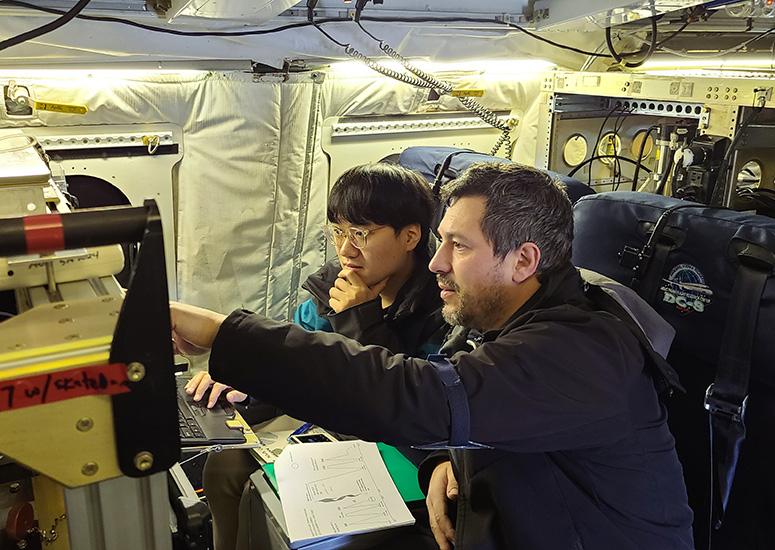
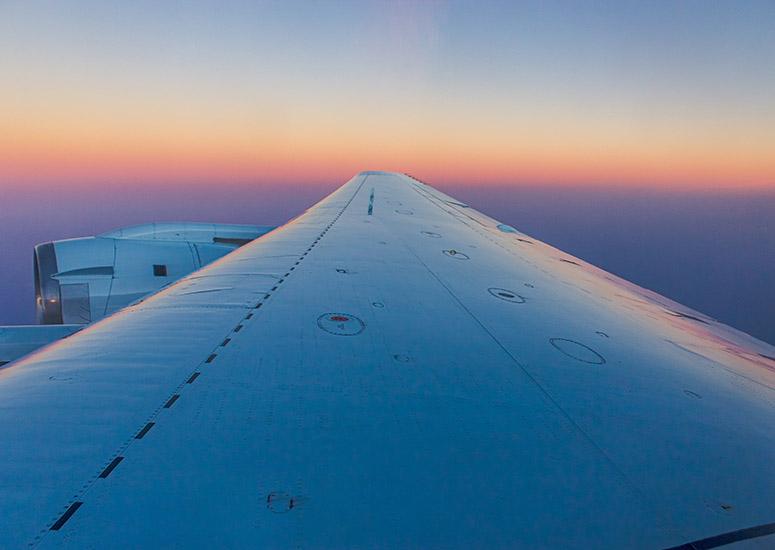
On 17–18 January, staff from the German Aerospace Center got to compare their new Gulfstream G550 jet, dubbed HALO, with its closest counterpart—the NSF/NCAR Gulfstream V, called HIAPER, which debuted in 2005.
It’s been two decades since NOAA launched its Climate and Global Change Postdoctoral Program. The C&GC program was created in response to a lack of trained specialists, and it’s kept up with continued expansion in climate change study.
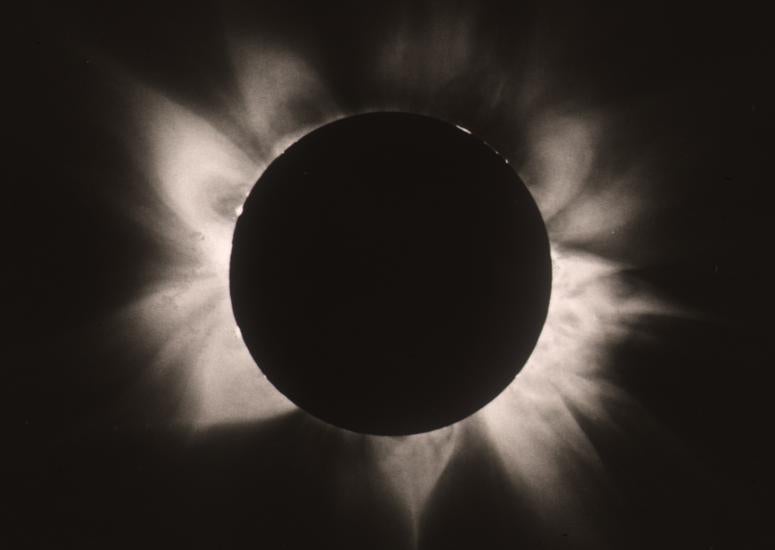
One of the most enduring mysteries in solar physics is why the Sun’s outer atmosphere, or corona, is millions of degrees hotter than its surface. Now scientists believe they have discovered a major source of hot gas that replenishes the corona.
Snowstorms have been a dime a dozen across much of the central and eastern United States over the last few months, but four of them got special scrutiny.
The biggest upgrade to the U.S. weather-radar network in 15 years gets rolling this winter with a minimum of fanfare—debuting under the radar, as it were. But the new capabilities should get their fair share of attention in the long run.
Atmospheric science has lost one of the last living links to its formative era. Joachim Kuettner—the eminent researcher, administrator, field project leader, and glider pilot—died on 24 February at the age of 101.
No stranger to NCAR or to observational meteorology, Vanda Grubišić (University of Vienna) will take the helm of NCAR’s Earth Observing Laboratory (EOL) on 1 July.
When climate change leaped into global consciousness more than 20 years ago, there was no doubt that sea levels would rise, but the main worry was how those rising seas would affect civilization, not on how the oceans themselves might be transformed.
Long-time UCAR president Richard Anthes announced on 25 February that he plans to step down at the end of 2011. Appointed to his position in 1988, Anthes is the longest serving of the five UCAR presidents since the organization was established in 1960.
In a bid to unlock longstanding mysteries of the Sun, including the impacts on Earth of its 11-year cycle, a team of scientists from NCAR, France, and Spain has successfully probed a distant star.
International collaboration has always been at the heart of COSMIC, a six-satellite network that intercepts GPS signals to measure weather, climate, and space weather variables. Now one of the leading university collaborators on COSMIC, the University of Graz, is UCAR’s latest international affiliate.
As part of NCAR and UCAR 50th anniversary festivities, university members and affiliates attended a gala dinner on 5 October at the University of Colorado’s Stadium Club.
There was no gold medal, no podium ceremony, and definitely no tears from the losers on 30 July, but there was a new national champion. On that date, NOAA proclaimed that a South Dakota hailstone had surpassed all contenders in both size and weight.
Blossoming interest in geoengineering research over the last few years has ripened into a deeper consideration of the topic by scientists, policymakers, and the public. This interest has been boosted by a relative lack of action on mitigating climate change.
It’s not exactly a moment for celebration, but when a tropical storm is born in the Atlantic, millions of people learn about it quickly. As with any birth, though, a great deal has to happen in just the right way before a tropical storm is christened.
Richard Anthes suspected something was up when the UCAR Board of Trustees, minus himself, trooped to the stage at the institution’s 50th birthday dinner on 5 October. “When they started showing photos of my childhood, I really knew something was coming.”
One of the most influential and colorful atmospheric scientists of modern times passed from the scene unexpectedly on 19 July. Stephen Schneider died of an apparent heart attack while on board a flight from Sweden to London.