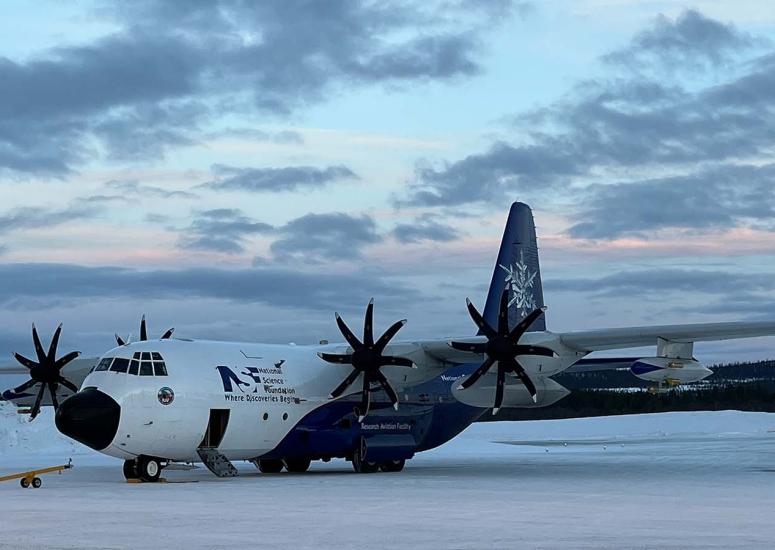
Prior to massive flooding early in 2011, long-term drought plagued the Australian state of Queensland . As part of a broad research program on cloud seeding, NCAR researchers have been steadily crunching data from a 2008–09 field project that looked into how to make the clouds drop more rain on the region.
Alaska is among the fastest-warming places on Earth, with its interior region warming the most statewide. A study by NCAR’s Shannon McNeeley looks at the vulnerability to climate change of native rural communities.
Like a creature from a hydrologic horror flick, Devils Lake, North Dakota, has been expanding off and on for 70 years, most dramatically from the mid-1990s onward. Some of its tendrils have blocked rail lines and roadways for years.
New research indicates that a regional nuclear war would deplete Earth’s protective ozone layer so profoundly that levels of ultraviolet radiation across the world would exceed levels now considered extreme.
Scientists, policymakers, and regional leaders presented the National Climate Adaptation Summit Report to President Obama's science and technology advisor, John Holdren.
One of the most influential and colorful atmospheric scientists of modern times passed from the scene unexpectedly on 19 July. Stephen Schneider died of an apparent heart attack while on board a flight from Sweden to London.
New, more interactive and versatile uses of the Web are beginning to enable profound changes in the entire life cycle of scientific publications. Among these developments, one that is currently looming large in many scientists’ minds is open access.
As the public and political dialogue surrounding climate change heats up, UCAR's Jack Fellows finds that climate change science has never been more rigorous and exciting.
Their letter to the president of the University of Virginia supports a statement by the university's faculty and questions the Virginia attorney general's use of governmental authority.
Clarence Mann, University of Michigan • Mann is crossing many boundaries on the way to a master's in environmental and land use planning. His research is creating new tools for urban planners and decision makers.
Policymakers should focus on what needs to be achieved in the next 40 years in order to keep long-term options viable for avoiding dangerous levels of warming, a new study concludes.
Rich Anthes, UCAR president, believes that it is vital that we pay attention to what electronic communication can take from us, as well as what it can give us.
UCAR is concerned that emails and data, including personal information about individuals, have been hacked from the University of East Anglia. The selective publication of some stolen emails and other papers taken out of context is not a responsible way to engage on the issue of climate change.
How do people and organizations respond to extreme weather events—in particular, flash floods? Flash floods are already on average the leading cause of weather-related fatalities in the United States and second most common worldwide.
For Rana Fine at the University of Miami, this an exciting time for the UCAR community to be engaged in some of the most important issues facing our nation today.
Close to 9 out of 10 adult Americans obtain weather forecasts regularly, and they do so more than three times each day on average, according to a new nationwide survey.
NCAR researchers are studying whether the eruption of Indonesia’s Mt. Toba supervolcano about 70,000–75,000 years ago may have cooled Earth enough to initiate an ice age and potentially alter the course of human evolution.
The 2008 Super Tuesday tornado outbreak swept through several southern states and the lower Ohio Valley, killing 57 people. NCAR scientist Julie Demuth helped the National Weather Service assess the societal impacts of the deadly storms.