A team of NCAR researchers led by Jacob Fugal is developing and testing a specialized instrument that uses digital holography to measure tiny cloud droplets.
A new study led by NCAR scientist David Edwards is the first to apply the concept of Observing System Simulation Experiments to chemical weather (predicting pollution events and variability in the atmosphere’s chemical composition).
An experimental modeling study by a team of scientists that includes NCAR’s Hanli Liu (High Altitude Observatory) points to the propagation of waves upward from the lower atmosphere as a driver for variability in the ionosphere. The research is an important step toward better understanding space weather.
NCAR researchers are studying whether the eruption of Indonesia’s Mt. Toba supervolcano about 70,000–75,000 years ago may have cooled Earth enough to initiate an ice age and potentially alter the course of human evolution.
A new technique developed at NCAR will help asteroseismologists learn about stars from their oscillations, or “starquakes.” These variations in the brightness of stars reveal information about their internal structures.
One of the challenges for global climate modelers is accurately simulating cloud cover and its changes over time. This is vital for projecting future temperatures, rainfall, and other aspects of global and regional climate change.
Using a highly efficient modeling technique, Pablo Ortiz (University of Granada) and Piotr Smolarkiewicz (ESSL/MMM) have simulated the role of winds in forming sand dunes and sandholes.
NCAR researchers are looking at how new generations of super-fast Graphical Processing Units (GPUs) and multicore chips, such as the Cell Broadband Engine, can be used in atmospheric models.
The 2008 Super Tuesday tornado outbreak swept through several southern states and the lower Ohio Valley, killing 57 people. NCAR scientist Julie Demuth helped the National Weather Service assess the societal impacts of the deadly storms.
NCAR scientists are working on a bigger, bolder version of WACCM (the Whole Atmosphere Community Climate Model), called WACCM-eXtension, or WACCM-X for short. The enhanced version extends the model to an altitude of about 310 miles.
A team of researchers that includes NCAR’s Synte Peacock and Frank Bryan has carried out the first-ever century-long global ocean simulations with high enough resolution to capture mesoscale eddies.
NCAR scientist Fei Chen is collaborating with colleagues at China’s Institute of Urban Meteorology to explore how growth in Beijing is changing the city’s summer rainfall patterns, focusing specifically on the relationship between urban expansion, aerosols, and summer rainfall.
While there has been much attention focused on the question of whether climate change influences hurricanes, scientists are also interested in whether the reverse holds true: do hurricanes significantly impact global climate?
New research by NCAR scientists uses atmospheric general circulation model experiments to explore how projected losses in Arctic sea ice may affect climate.
On November 8, 2007, scientists Giuliana de Toma and Roberto Casini noted something very unusual in observations of a solar prominence collected at NCAR's Mauna Loa Solar Observatory (MLSO). Prominences are magnetic structures that appear as clouds of cool, very dense material suspended for days or weeks in the much hotter, less dense solar corona.
NCAR postdoctoral researcher Yongku Kim is using epidemiologic data to study the effects of ozone regulation on human health. He’s leading an assessment of how various regulatory standards for ozone may affect non-accidental mortality, including respiratory-related deaths during ozone season.
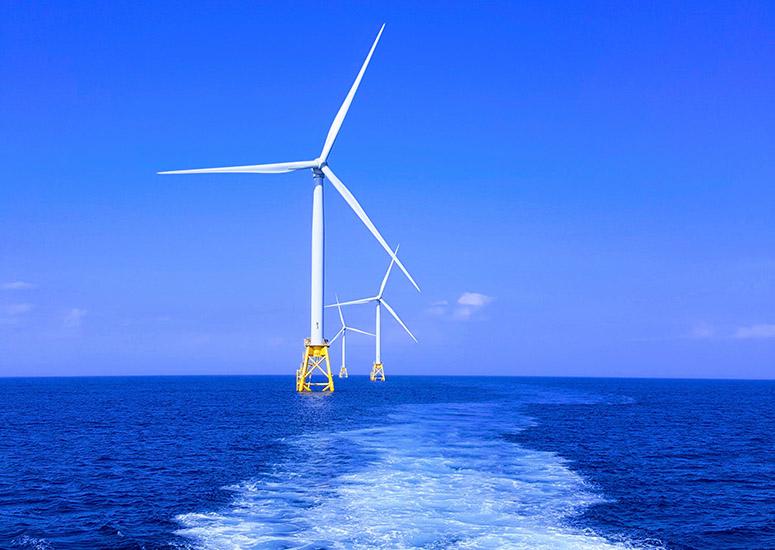
Accurate, high-resolution weather forecasts are a critical part of wind energy production. In December, UCAR signed an agreement with Xcel Energy to develop a wind prediction system for the company’s wind energy farms in Colorado, Minnesota, and Texas.
Several red-eye commercial flights were rocked by moderate to severe turbulence as they flew across northeast Kansas early on June 17, 2005. A new study by NCAR scientists Stan Trier and Bob Sharman uses modeling to connect storms in Oklahoma with the Kansas turbulence.
A new UCAR COMET Program course, Weather and Health, will help meteorologists and others broaden their understanding of the impacts of weather and climate on public health.
Lake Victoria's water levels reached a 40-year low in 2006 when East Africa was gripped by drought. A study by NCAR scientist Sean Swenson shows that drought was not the only cause of Lake Victoria's shrinkage—human management at the dam was also to blame.
NCAR scientists Bill Large and Steve Yeager have produced a new analysis of the exchanges of heat, momentum, and moisture between the oceans and atmosphere that should help climate modelers better assess variability on several time scales.
NCAR scientist Brian O’Neill is building an integrated assessment model to link a range of societal factors, such as future global economic and population trends, with the physical science of climate change.
In a potential boon for agriculture, a NASA-funded effort that involves NCAR and the private firm DTN/Meteorlogix has produced one of the world’s most accurate systems for predicting soil temperature up to two days in advance.
Research by NCAR scientist Mary Hayden underscores the risk of dengue fever and the growing threat of dengue hemorrhagic fever in the Rio Grande Valley between far south Texas and northeast Mexico.