Students, gardeners, retirees, and other volunteers taking part in a nationwide initiative, Project BudBurst, are finding hints that certain plants are blooming unusually early.
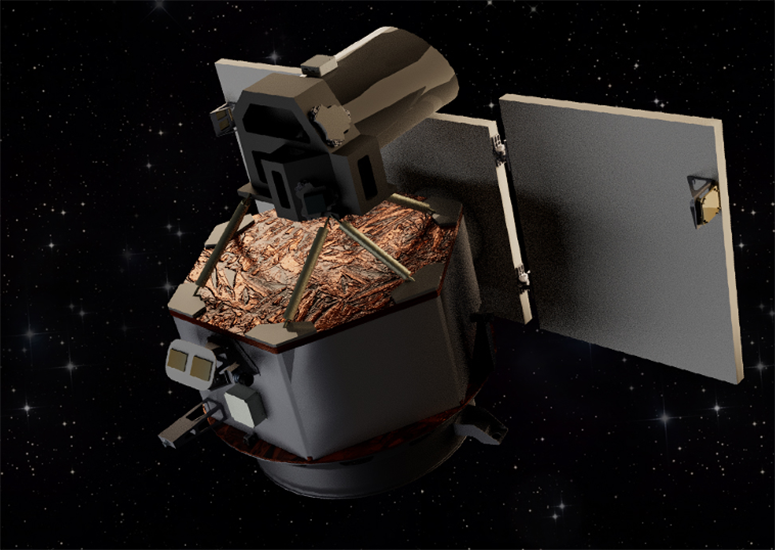
An innovative computational technique that draws on statistics, imaging, and other disciplines has the capability to detect errors in sensitive technological systems ranging from satellites to weather instruments.
Roger M. Wakimoto, an associate director and senior scientist at the National Center for Atmospheric Research, was named the center's new director today.
Margaret "Peggy" LeMone, a senior scientist at the National Center for Atmospheric Research, today begins a one-year term as president of the American Meteorological Society.
The National Center for Atmospheric Research (NCAR) is partnering with the Boulder Public Library to present a series of public talks and a new exhibit to mark the research organization's 50th anniversary this year.
Policymakers should focus on what needs to be achieved in the next 40 years in order to keep long-term options viable for avoiding dangerous levels of warming, a new study concludes.
In a vivid example of how a small geographic feature can have far-reaching impacts on climate, new research shows that water levels in the Bering Strait helped drive global climate patterns during ice age episodes dating back more than 100,000 years.
NCAR announced today the selection of a construction management and general contracting firm for the NCAR-Wyoming Supercomputing Center (NWSC) project.
Eric J. Barron, the director of NCAR, will step down from his position to assume the presidency of Florida State University. An alumnus of FSU, Barron was selected yesterday by its Board of Trustees to lead the university.
UCAR is concerned that emails and data, including personal information about individuals, have been hacked from the University of East Anglia. The selective publication of some stolen emails and other papers taken out of context is not a responsible way to engage on the issue of climate change.
Spurred by a warming climate, daily record high temperatures occurred twice as often as record lows over the last decade across the continental United States, new research shows.
As the U.S. Senate considers climate change legislation, 18 leading scientific organizations have sent a letter to members of the senate reaffirming the scientific consensus that climate change is occurring and that greenhouse gases from human activities are the primary driver.
The National Center for Atmospheric Research (NCAR) has passed an Open Access policy requiring that peer-reviewed research published by its scientists and staff in scientific journals be made publicly available online through its institutional repository.
Challenging conventional wisdom, new research finds that the number of sunspots provides an incomplete measure of changes in the Sun's impact on Earth over the course of the 11-year solar cycle.
Subtle connections between the 11-year solar cycle, the stratosphere, and the tropical Pacific Ocean work in sync to generate periodic weather patterns that affect much of the globe, according to research appearing this week in the journal Science.
High-performance computing systems, visualization resources, and software tools provided by the National Science Foundation TeraGrid helped make the Hayden Planetarium's new space show the most scientifically accurate and advanced planetarium show ever produced, according to many reviewers.
The National Center for Atmospheric Research (NCAR) and its managing organization, the University Corporation for Atmospheric Research (UCAR), today unveiled design concepts for the Wyoming supercomputing center.
Establishing a key link between the solar cycle and global climate, new research led by the National Center for Atmospheric Research (NCAR) shows that maximum solar activity and its aftermath have impacts on Earth that resemble La Niña and El Niño events in the tropical Pacific Ocean.